Oral Surgery
TMJ Disorder Treatment
Jaw pain, clicking, and tension headaches aren't something you have to live with — TMJ treatment can bring real relief.
Book Appointment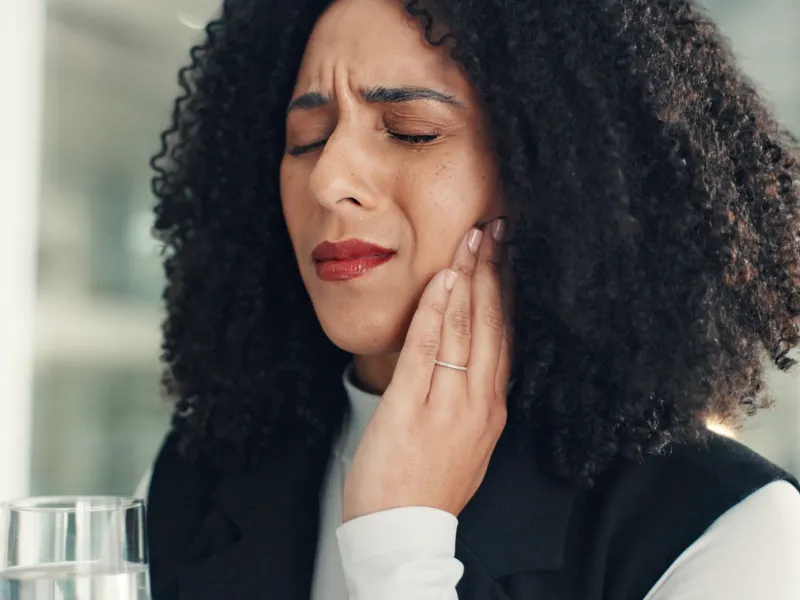
TMJ disorder affects the joints and muscles connecting your jaw to your skull, often causing clicking, popping, pain, or stiffness — and frequently showing up as headaches or ear discomfort rather than obvious jaw symptoms.
Treatment usually starts conservatively, aiming to reduce strain on the joint and muscles before considering anything more involved, and most patients see meaningful relief without surgery.
Is this right for you?
- You have jaw pain, clicking, or popping
- You wake up with headaches or a sore jaw
- You grind or clench your teeth at night
- Your jaw sometimes locks or feels stiff
What to expect
Evaluation
We assess your bite, jaw movement, and any signs of grinding or joint strain.
Personalized plan
Treatment might include a custom night guard, bite adjustment, or other conservative therapy.
Relief & monitoring
We follow up to make sure your symptoms are improving and adjust the plan as needed.
FAQ
Questions about tmj disorder treatment
What causes TMJ disorder?
Common causes include teeth grinding, jaw misalignment, stress, and joint inflammation — often more than one factor is involved for a given patient.
Is a night guard enough to treat it?
For many patients, yes — a custom night guard significantly reduces strain and symptoms. More complex cases may need additional treatment alongside it.
When should I see someone about jaw pain?
If jaw pain, clicking, or headaches are frequent or worsening, it's worth an evaluation rather than waiting it out, since early treatment tends to be simpler.
Can TMJ disorder cause headaches or ear pain?
Yes — jaw muscle tension often radiates to the temples and ears, which is why TMJ is sometimes overlooked as the actual source of chronic headaches.
Is TMJ treatment covered by insurance?
Coverage varies by plan and by whether treatment is considered medical or dental — our team will help you understand your specific benefits.
Will I need surgery for TMJ disorder?
Surgery is rarely the first step — most patients improve significantly with conservative treatment like a night guard, bite adjustment, or physical therapy referral.

Ready for a healthier, brighter smile?
New patients are always welcome. Call or send a request — our team will get back to you shortly.